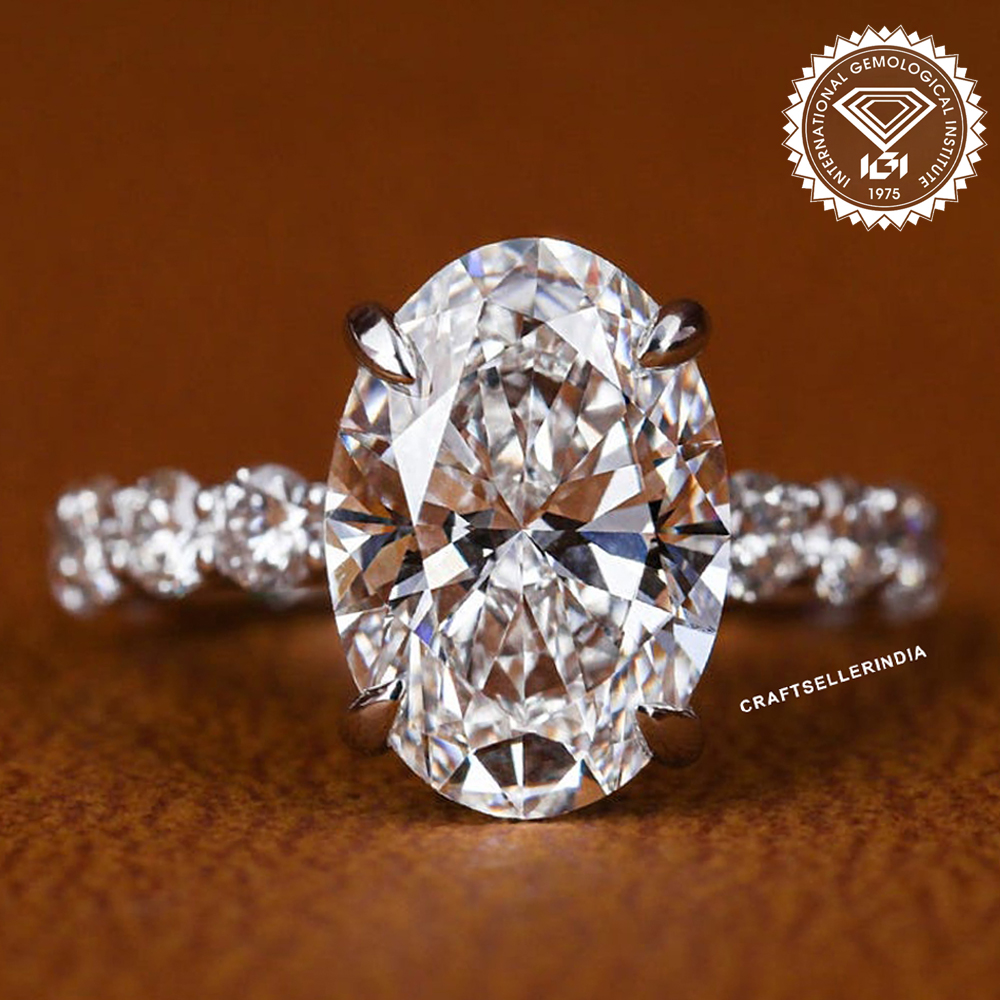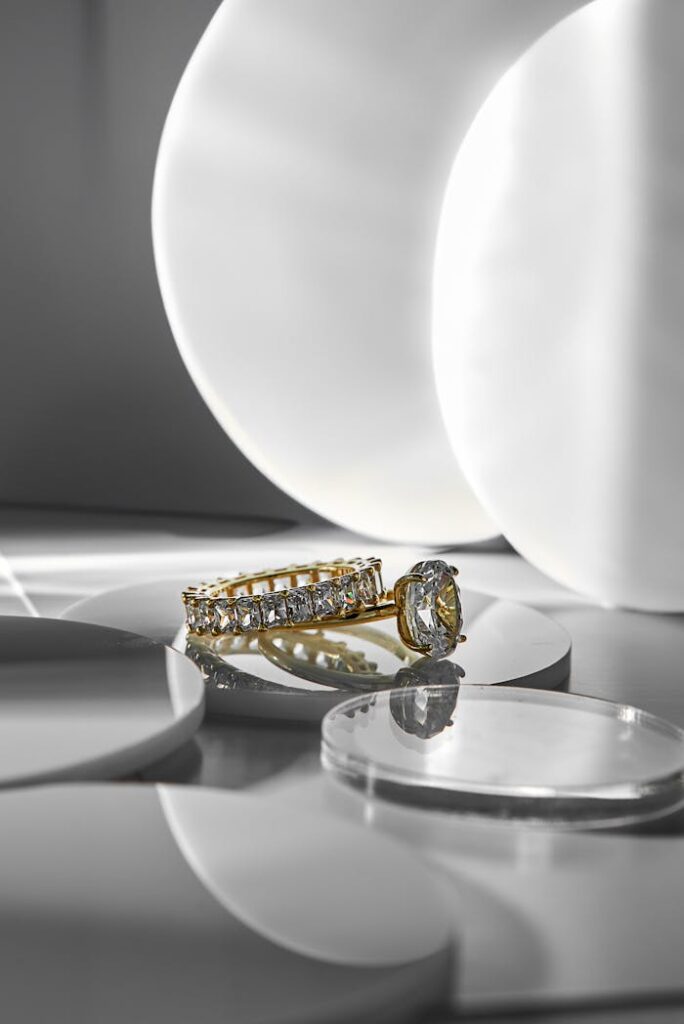

Lab Grown Diamond vs Moissanite: Which One Should You Actually Buy?
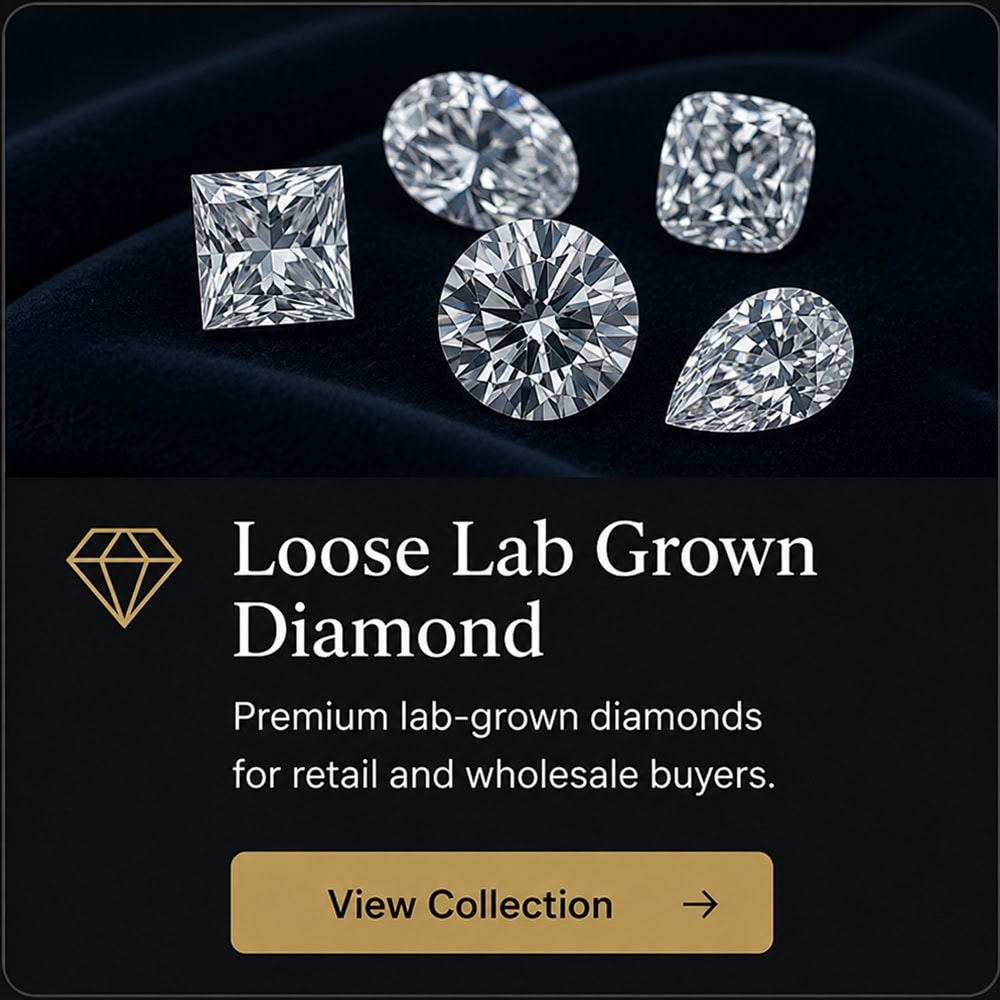
If you have been shopping for an engagement ring, a tennis chain, or a pair of studs, you have probably seen the same two words again and again: lab grown diamond and moissanite.
Both look stunning. Both cost far less than a mined diamond. Both are sold everywhere online. And almost every website tells you a slightly different story about which one is “better.”
We manufacture both. Our workshop in Surat, India — the city that cuts and polishes the majority of the world’s diamonds — produces lab grown diamond jewelry and moissanite jewelry every single day. So we see the raw stones, we set them, we inspect them under magnification, and we hear what customers come back and tell us months later.
This guide is the honest version. No hype, no sales pressure. By the end, you will know exactly which stone fits your budget, your lifestyle, and the person you are buying for.
Quick Answer (For People In a Hurry)
- Choose a lab grown diamond if you want a real diamond, a certificate, and a stone that will always be identified as a diamond by any jeweler in the world.
- Choose moissanite if you want maximum sparkle for the smallest budget, or you want a much bigger look for the same money.
Both are excellent. Neither is “fake.” The rest of this article explains why.
First, What Exactly Is a Lab Grown Diamond?
A lab grown diamond is a real diamond. Not a copy, not a lookalike.
It is made of pure carbon, arranged in exactly the same crystal structure as a diamond pulled out of the ground. The only difference is where it was born: inside a controlled machine over a few weeks, instead of inside the earth over a few billion years.
There are two ways to grow them:
CVD (Chemical Vapour Deposition) — A tiny diamond seed is placed in a sealed chamber. Carbon-rich gas is added and heated until carbon atoms rain down onto the seed, layer by layer, growing a diamond crystal.
HPHT (High Pressure High Temperature) — A machine recreates the crushing pressure and heat found deep inside the earth, turning carbon into diamond.
After growing, the rough stone is cut and polished by the same craftsmen, using the same wheels and the same skills, as mined diamonds. In our Surat workshop, the polisher often cannot tell you which is which without checking the paperwork.
Important: Gem laboratories like IGI and GIA test and certify lab grown diamonds and grade them on the same 4Cs — cut, colour, clarity and carat. If a seller cannot show you a certificate for a stone above 0.30 carat, walk away.
And What Is Moissanite?
Moissanite is a different material altogether — silicon carbide (SiC), not carbon.
It was first discovered in 1893 by the French chemist Henri Moissan, inside a meteor crater in Arizona. He initially thought he had found diamonds. Natural moissanite turned out to be so incredibly rare that it is essentially impossible to use in jewelry, so every moissanite you can buy today is created in a lab.
Here is the key point that confuses shoppers: moissanite is not a fake diamond and it is not cubic zirconia. It is its own gemstone, with its own properties, and some of those properties actually beat diamond.
The Honest Side-by-Side Comparison
| Lab Grown Diamond | Moissanite | |
|---|---|---|
| What it’s made of | Pure carbon | Silicon carbide |
| Is it a real diamond? | Yes | No — it’s its own gemstone |
| Hardness (Mohs scale) | 10 — the hardest known material | 9.25 — second only to diamond |
| Sparkle type | White flashes + subtle rainbow | Intense rainbow flashes (“fire”) |
| Fire (dispersion) | 0.044 | 0.104 — more than double |
| Brilliance (refractive index) | 2.42 | 2.65–2.69 — higher |
| Certified by IGI/GIA? | Yes, graded on the 4Cs | Usually a manufacturer’s certificate only |
| Typical price | Roughly 60–85% less than a mined diamond of the same size and quality | Roughly 90% less than a mined diamond |
| Passes a diamond tester? | Yes, because it is a diamond | Reads as “moissanite” on modern dual testers |
| Resale value | Low, like all diamonds today | Very low |
| Everyday wear | Excellent | Excellent |
Sparkle: This Is Where People Get Surprised
Most shoppers assume diamond sparkles the most. It doesn’t — not in every way.
Think of sparkle as two separate things:
Brilliance is the white light bouncing back at you. Fire is the rainbow colour flashing out of the stone.
Moissanite has more than double the fire of a diamond. Under bright light — sunlight, restaurant spotlights, a phone flashlight — moissanite throws vivid rainbow flashes that a diamond simply cannot produce. Some people fall in love with this instantly. Others find it a bit theatrical and prefer the calmer, icier, more classic look of diamond.
There is no right answer here. It is purely taste. Our honest advice: if you can, look at both under natural daylight before deciding. If you are ordering online, ask the seller for a video shot in daylight, not in a lightbox.
One technical note: moissanite is doubly refractive, meaning light splits into two rays inside the stone. In larger sizes — usually above 2 carats — a trained eye looking through the crown at an angle may notice a very slight “doubled” look at the facet edges. In normal wear, at arm’s length, nobody sees this.
Durability: Will It Last a Lifetime?
Both will. This is the least worrying part of the decision.
Diamond sits at 10 on the Mohs hardness scale — nothing scratches it except another diamond. Moissanite sits at 9.25, which is harder than sapphire, harder than ruby, and far harder than anything you will realistically bump it against in daily life.
Compare this to cubic zirconia (CZ), which sits at around 8–8.5. CZ looks acceptable in the shop but becomes cloudy and scratched within a year or two of daily wear. This is why we do not build our fine jewelry around CZ, and why you should be cautious when a price looks impossibly low.
For an engagement ring worn every day for forty years, both lab grown diamond and moissanite will still look sharp.
Price: The Real Reason Most People Are Reading This
Let us be direct about the money, because this is usually the deciding factor.
For the same size, in the same setting, the rough order is:
Mined diamond → Lab grown diamond → Moissanite, from most expensive to least.
A lab grown diamond typically costs a fraction of a mined diamond of the same specification. Moissanite typically costs a fraction of that again.
Here is the practical way to use this:
- Fixed budget, want the biggest look? Moissanite. You can often go up two or three carat sizes for the same spend.
- Fixed budget, want a certified diamond? Lab grown diamond. You will get a genuine, certified diamond at a size that a mined stone budget would never reach.
- Buying an iced-out chain, bracelet, or watch with hundreds of stones? Moissanite makes enormous financial sense here, because the stone count multiplies every rupee or dollar of difference.
(Please check our current product pages for live pricing — the market moves.)
What About Resale Value?
Here is something most jewelry websites will not tell you plainly.
Neither stone is an investment. Lab grown diamond prices have fallen significantly as production capacity has grown, and moissanite has never carried resale value. Even mined diamonds typically resell for a fraction of the retail price.
So buy jewelry because you want to wear it and love it — not because you expect to sell it later. If you want an investment, buy gold bullion. If you want something beautiful on your hand every day, buy the stone that makes you smile when the light hits it.
The one thing that does hold value in your piece is the metal — solid 14K or 18K gold, or platinum. This is one reason we build in solid gold rather than plating.
How To Tell Them Apart
- A basic thermal diamond tester will say “diamond” for both, because moissanite conducts heat similarly. This is why old testers gave false results for years.
- A modern dual tester (thermal + electrical conductivity) correctly identifies moissanite as moissanite.
- A gem lab can identify both with total certainty.
- Your eyes, in bright light, will often spot moissanite by its rainbow fire.
A note on honesty: reputable sellers always disclose exactly what they are selling. In the US, the FTC requires that lab grown diamonds be clearly described as laboratory-grown, and moissanite must never be sold as diamond. If a listing is vague about what the stone actually is, treat that as a warning sign.
How To Care For Both
Good news — the routine is identical and takes two minutes:
- Mix warm water with a drop of mild dish soap.
- Soak the piece for 15 minutes.
- Gently brush behind and under the stone with a soft toothbrush — this is where oil and lotion build up and kill sparkle.
- Rinse and pat dry with a lint-free cloth.
Do this every two to three weeks and your piece will look showroom-new for years.
Avoid: chlorine and bleach (they attack the alloys in gold, not the stone), and take pieces off before the gym, gardening, or heavy lifting — not to protect the stone, but to protect the setting and prongs.
Have your prongs checked by a jeweler once a year. Stones are almost never lost because they broke; they are lost because a prong wore thin and nobody noticed.
So, Which One Should You Choose?
Go with a lab grown diamond if:
- The word “diamond” matters emotionally to you or the person receiving it
- You want IGI or GIA certification and formal 4C grading
- You prefer a classic, white, icy sparkle
- You want a stone that any jeweler anywhere will confirm as a diamond
Go with moissanite if:
- You want the largest possible look for your budget
- You love intense, colourful, high-drama sparkle
- You are buying a multi-stone piece — a tennis chain, bracelet, or iced-out watch
- You are practical about the fact that no stone is a real investment
And if you are still torn: many of our customers buy a moissanite piece for everyday wear and travel, and a lab grown diamond for the milestone piece. That is a completely reasonable strategy.
Why Buy From a Manufacturer Instead of a Reseller
Most online jewelry stores are middlemen. They buy finished pieces, mark them up, and ship them out.
Bluequeen Jewels is different — we are the workshop. Our team in Surat sources the stones, sets them, finishes the metal, and quality-checks each piece before it leaves. That means:
- Direct pricing, with no layers of markup between the bench and your hand
- Real custom work — change the stone shape, the carat weight, the metal colour, the setting style
- Solid gold construction, not plated
- Certification available on lab grown diamond pieces
- We answer stone questions properly, because we are the ones who set them
Whether you are one person buying one engagement ring, or a retailer looking for a wholesale manufacturing partner, you are talking to the people who actually make it.
Frequently Asked Questions
Is a lab grown diamond a real diamond? Yes. It is chemically, physically and optically identical to a mined diamond. The only difference is its origin. Gem laboratories certify it as a diamond, specifying that it is laboratory-grown.
Is moissanite a real diamond? No. Moissanite is silicon carbide, a completely different gemstone. It is a real gemstone with genuine value and beauty, but it should never be sold or described as a diamond.
Which sparkles more, moissanite or lab grown diamond? Moissanite has more than double the fire (rainbow flash) and a higher refractive index. Diamond has a whiter, more restrained brilliance. Moissanite sparkles more dramatically; whether that is “better” is entirely personal taste.
Will moissanite get cloudy over time? No. That is cubic zirconia, which is much softer. Moissanite is 9.25 on the Mohs scale and will not cloud or scratch with normal wear. If a moissanite looks dull, it needs cleaning, not replacing.
Does moissanite pass a diamond tester? On an old thermal-only tester, yes — which caused years of confusion. Modern dual testers correctly identify it as moissanite.
Are lab grown diamonds cheaper than mined diamonds? Yes, substantially — typically a large fraction less for the same size and quality. Prices have also come down as production has grown.
Can I get a certificate with my stone? Yes. We offer IGI certification on lab grown diamond pieces above the standard carat threshold. Just ask before ordering.
Which is better for an engagement ring? Both work beautifully. Choose lab grown diamond if certification and the word “diamond” matter. Choose moissanite if size-for-budget and maximum sparkle matter. Both will survive a lifetime of daily wear.