
A diamond grading report (often called a “certificate”) is the diamond’s ID card. It is written by an independent gem laboratory, not by the seller, and it tells you exactly what the stone is. The trouble is that reports are packed with codes, numbers and diagrams. This guide explains how to read a diamond grading report section by section, so you can buy with confidence.
Who Issues Diamond Reports?
The best-known laboratories include GIA (Gemological Institute of America) and IGI (International Gemological Institute). Both grade natural and lab-grown diamonds. Whichever lab you see, the most important thing is that the report is from a recognised, independent laboratory — and that you can verify it.
Step 1: Check the Report Number
Every report has a unique number. You can usually enter it on the laboratory’s website to see an online copy. Many diamonds also have this number laser-inscribed on the girdle (the thin outer edge), which a jeweler can show you under magnification. If the numbers match, you know the report belongs to your stone.
Step 2: Natural or Laboratory-Grown?
This is one of the first lines to read. A lab-grown diamond report clearly states that the stone is laboratory-grown and often names the growth method (CVD or HPHT). IGI reports may also note whether there is any indication of post-growth treatment. In the USA, sellers must describe lab-grown stones clearly — see our post on lab-grown diamond disclosure rules.
Note: grading systems for lab-grown diamonds have been changing, and some labs now use simpler descriptive terms instead of the full colour and clarity scale. Always check which system your report uses.
Step 3: Shape, Cutting Style and Measurements
The report lists the shape (e.g. round, oval) and cutting style (e.g. brilliant, step cut), followed by measurements in millimetres. For a round, you will see minimum diameter – maximum diameter × depth. For fancy shapes, you will see length × width × depth, which helps you work out the length-to-width ratio. Learn more in our diamond shapes guide.
Step 4: The 4Cs
Carat weight
Weight, not size, given to two decimal places. One carat is 0.20 grams. Two diamonds of the same weight can look different in size depending on cut and shape.
Colour grade
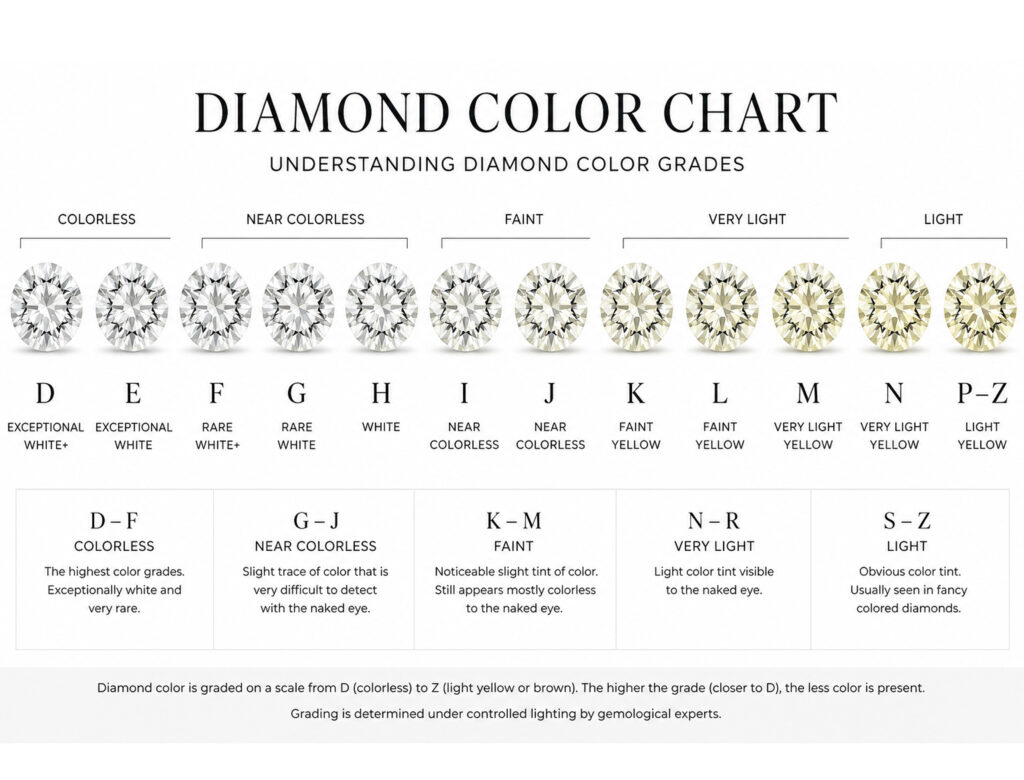
For white diamonds, the scale runs from D (colourless) to Z (light yellow or brown). D–F are colourless, G–J are near-colourless. Most people cannot see a difference between neighbouring grades once the stone is set.
Clarity grade
This describes internal features (inclusions) and surface marks (blemishes), from FL (flawless) through IF, VVS1, VVS2, VS1, VS2, SI1, SI2 down to I1–I3. “Eye-clean” stones usually start around VS2 or SI1, depending on shape. Our post on VVS vs VS diamonds explains the top grades in more detail.
Cut grade
For round brilliants, labs give an overall cut grade (for example, Excellent at GIA, or Ideal and Excellent at IGI). Cut has the biggest impact on sparkle, so for rounds it is the grade many experts prioritise. Fancy shapes often do not receive an overall cut grade, so look at polish, symmetry and proportions instead.
Step 5: Polish and Symmetry
These grade the finishing quality: how smooth the facets are (polish) and how evenly they are aligned (symmetry). “Excellent” or “Very Good” is ideal. Lower grades can reduce sparkle slightly.
Step 6: Fluorescence
Some diamonds glow (usually blue) under ultraviolet light. The report lists this as None, Faint, Medium, Strong or Very Strong. In most cases, fluorescence has no visible effect in normal light. Very strong fluorescence can occasionally make a stone look slightly hazy, so view it in person if possible.
Step 7: The Diagrams
- Proportions diagram — shows table size, depth percentage, crown and pavilion angles, and girdle thickness. These numbers help explain how the stone handles light.
- Clarity plot — a map of the stone showing where inclusions sit (red for internal, green for surface on many reports). It works like a fingerprint for identifying your diamond.
Step 8: Comments
Always read the comments box. It may mention things like extra facets, clouds that were not shown on the plot, or inscriptions. Small details here can matter.
Diamond Grading Report Cheat Sheet
Save or screenshot this table: it sums up how to read a diamond grading report in one place.
| Report section | What it tells you | What to look for |
|---|---|---|
| Report number | The unique ID for this exact stone | It matches the lab’s online record and any girdle inscription |
| Natural or lab-grown | Where the diamond came from | A clear statement; lab-grown must be disclosed |
| Shape and measurements | Outline, cutting style and size in mm | Measurements match the stone you are shown |
| Carat, colour, clarity | Weight, whiteness and inclusions | The grades you are paying for |
| Cut grade | How well a round diamond handles light | Excellent or Very Good for the most sparkle |
| Polish and symmetry | Finish quality | Very Good or better |
| Fluorescence | Glow under UV light | None to Medium is usually safe |
| Comments | Treatments and extra notes | Any treatment or growth-method notes |
Tip: for GIA reports, you can confirm the details for free with GIA Report Check. GIA also explains how its graders work in its guide to GIA diamond grading.
Red Flags to Watch For
- A “certificate” produced by the seller rather than an independent lab.
- A report number you cannot verify online.
- Measurements or weight that do not match the stone you are shown.
- A lab-grown stone sold without a clear “laboratory-grown” description.
Frequently Asked Questions
Is a diamond grading report the same as an appraisal?
No. A grading report describes the diamond’s quality. An appraisal estimates its monetary value, usually for insurance.
Do small diamonds come with reports?
Usually not. Small accent stones (melee) in pavé or tennis jewelry are normally sold by quality range, not with individual reports.
Should I buy a diamond without a report?
For a centre stone, a report from an independent lab is strongly recommended. It protects you and makes the stone easier to insure.
Shop With Confidence
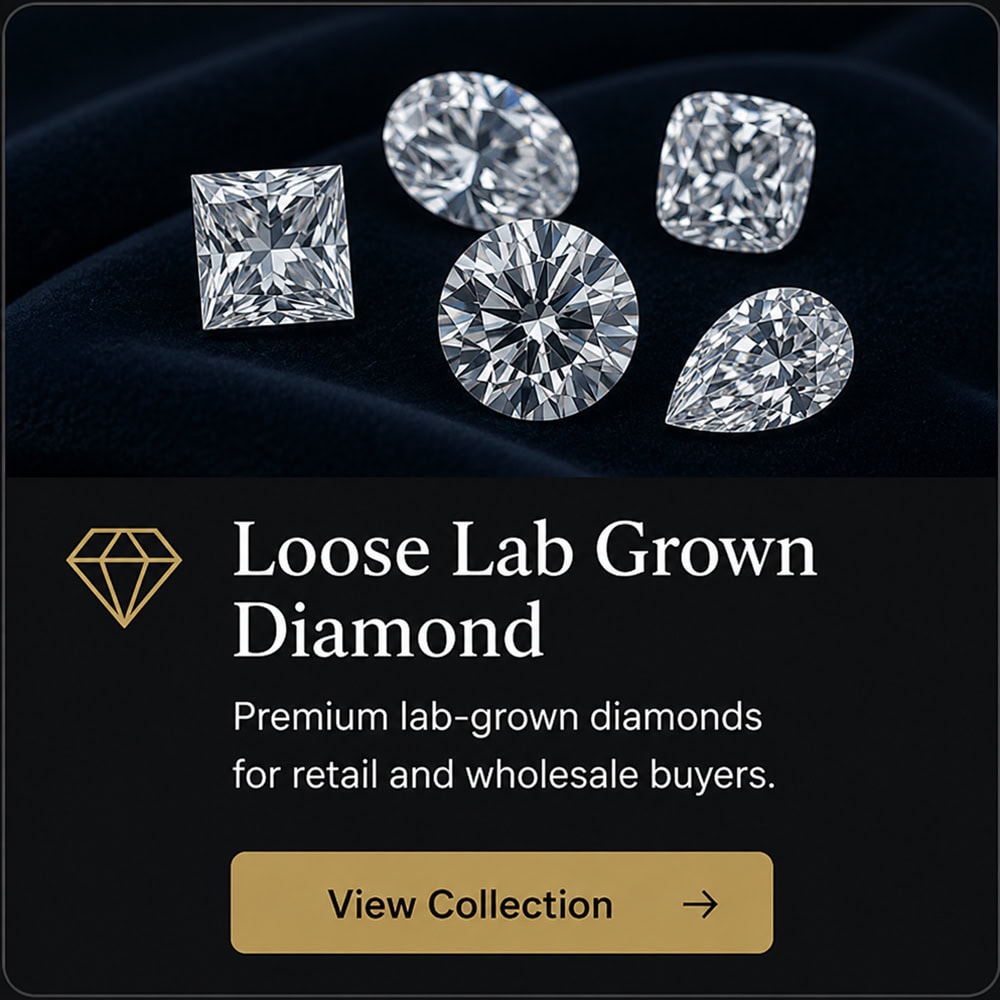
Bluequeen Jewels supplies loose lab-grown diamonds and finished lab-grown diamond jewelry. Ask us about grading reports for any centre stone you are considering.