
Private label jewelry manufacturing is how most independent jewelry brands actually get made. You design or specify the pieces, a factory produces them, and they ship under your brand rather than the manufacturer’s. It is less mysterious than it sounds — but the gap between a smooth first order and an expensive one comes down to a handful of things agreed before anything is cut.
Private label, white label and full custom
The three terms get used interchangeably and should not be.
- White label — you buy an existing design the factory already produces and put your branding on it. Fastest and cheapest, but the same piece may be sold to others.
- Private label — an existing design is modified for you, or a design is produced exclusively for your brand. Some development work, moderate cost, and you get differentiation.
- Full custom — a piece is designed from scratch to your brief, usually through CAD. Highest cost and longest lead time, and the design is yours.
Most brands end up running a mix: white label for basics that nobody chooses a brand over, private label or custom for the pieces that define them.
Who private label jewelry manufacturing suits
It works well for online jewelry sellers who want control over specification rather than reselling someone else’s catalogue; for retailers building a house line alongside branded stock; for designers who can draw but cannot manufacture; and for established brands adding a category, such as a bridal specialist moving into everyday pieces.
It suits the current market too. The Plumb Club identifies customization as a significant growth driver in 2026, alongside a broader consumer shift toward fewer, better purchases. And with metal costs where they are, being able to specify weight and karat yourself is worth real money — the World Gold Council reports US buyers moving decisively toward lighter-weight and lower-karat pieces.
The process, stage by stage
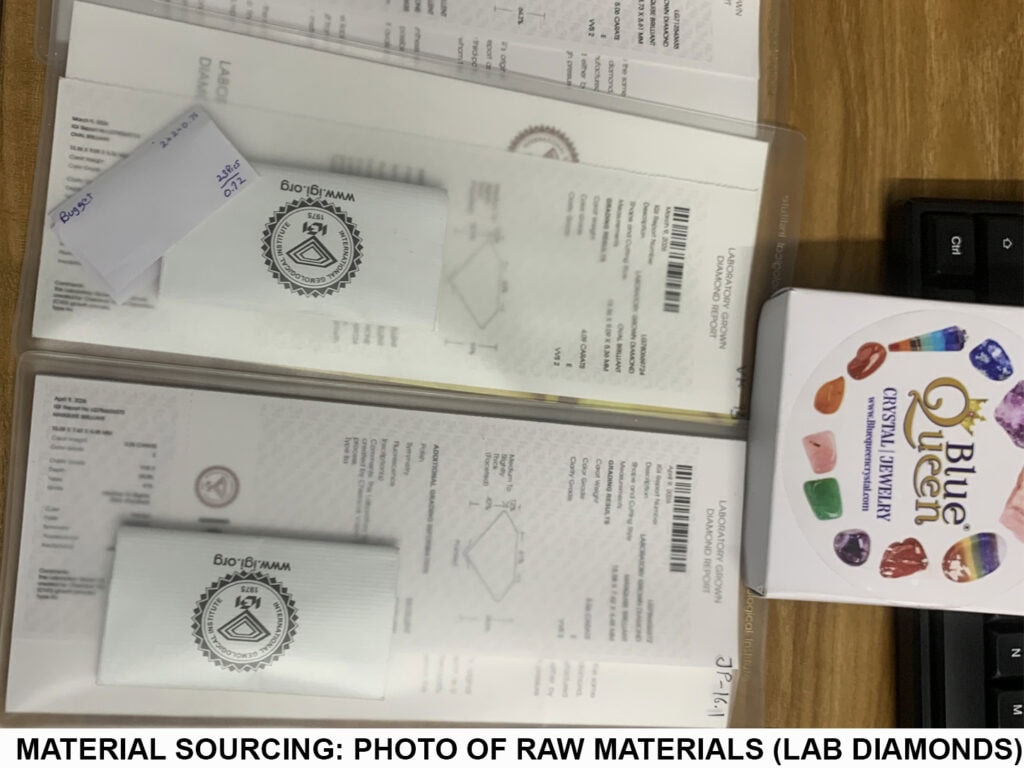
1. Brief. You supply reference images, sketches or an existing piece, plus target price, metal, karat, stone type and quantity. The more precise the brief, the fewer sampling rounds you pay for.
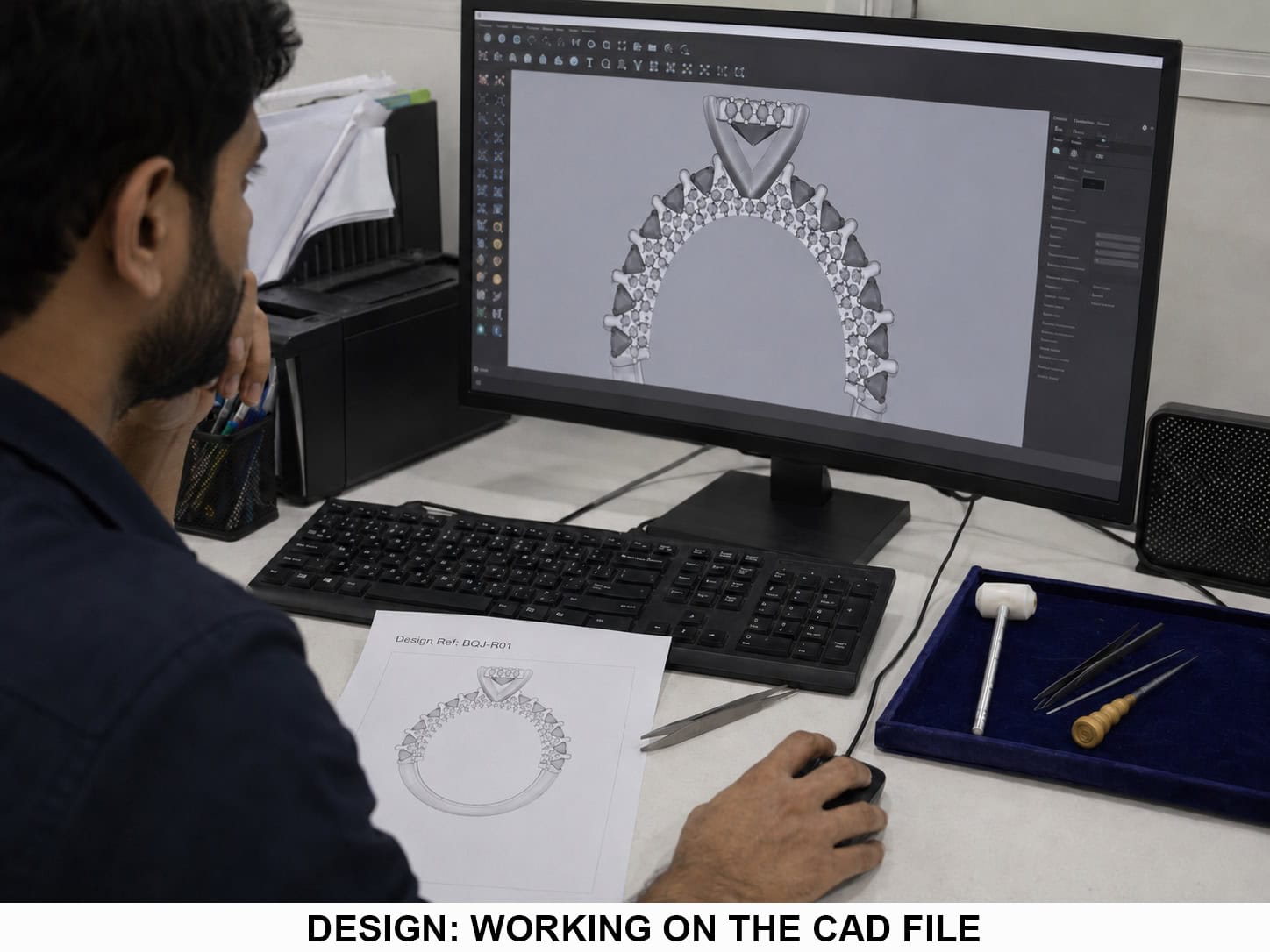
2. CAD. The design is modelled in 3D. This is the stage where you can change proportions, band width, setting height and — crucially — metal weight, before anything physical exists. Ask to see renders from several angles and to be told the estimated gram weight.
3. Sampling. A physical sample is produced, often in silver first to keep costs down, then in the final metal. Expect one or two rounds of revision on a genuinely new design.
4. Approval. You sign off on the sample, the specification and the price. Get the spec in writing: metal, karat, gram weight and tolerance, stone type, sizes, quantities, finish.
5. Production. Casting, setting, polishing and finishing. Lead times vary widely by factory, order size and season — ask for a date, not a range.
6. Quality control. Pieces are checked against the approved sample. Agree in advance what happens to items that fall outside tolerance.
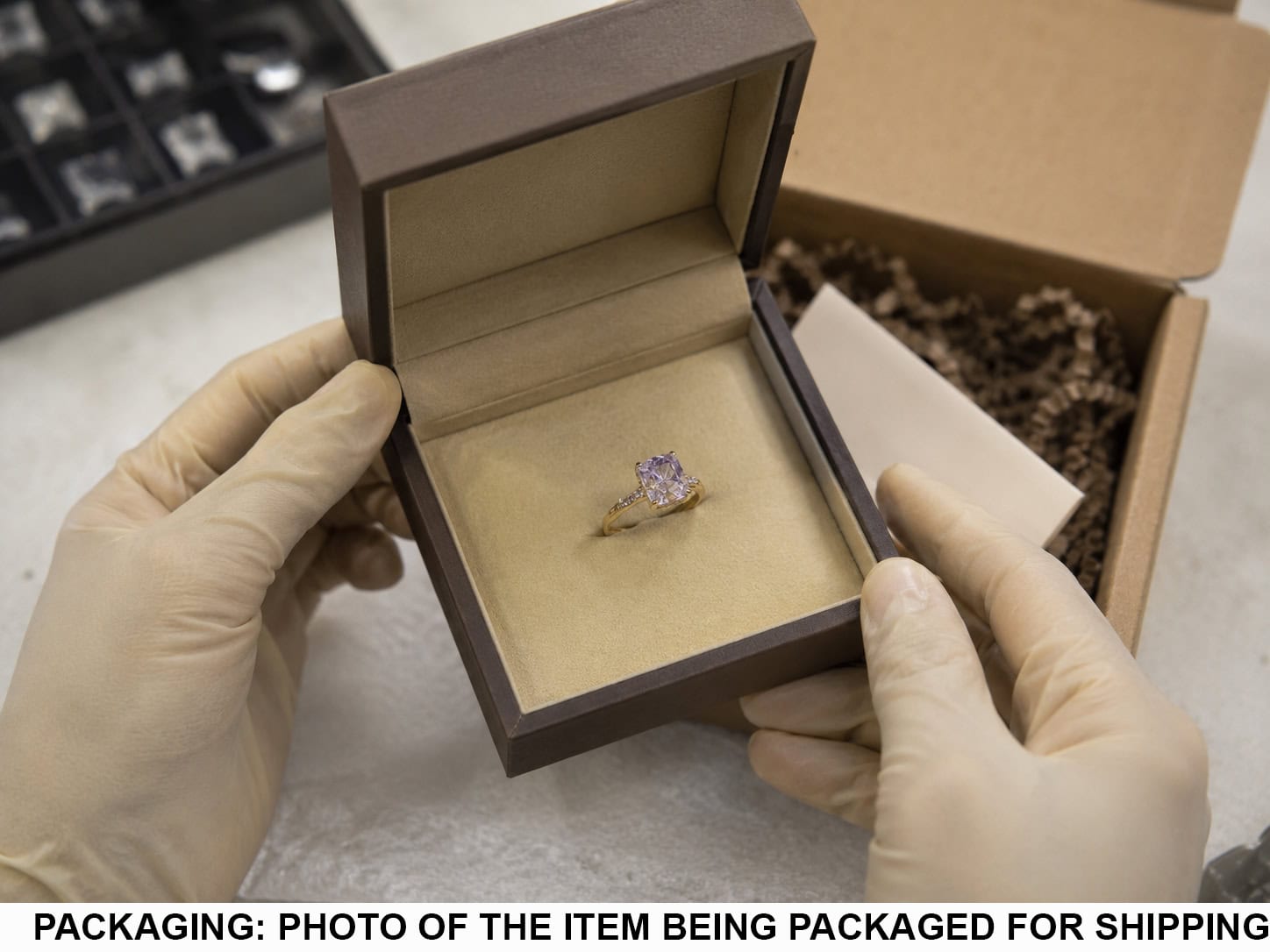
7. Packaging and dispatch. Your boxes, cards, labels and stamping. Confirm who supplies packaging and how long it adds to the timeline.
Who owns the design
If you paid for original CAD work, say so in writing, and state that the design will not be produced for anyone else. This is the single most common gap in private label arrangements. A modified stock design usually cannot be exclusive; a design created to your brief should be. Ask for the CAD files themselves, or at least for a written commitment that they will not be reused.
Minimum order quantities
MOQ is where new brands most often misunderstand a quote. There are two different figures:
- MOQ per design — how many of one specific piece you must order. This is the number that decides whether you can test five styles or must commit to one.
- MOQ per order — the total across the whole order, which may allow a mix of designs.
Both vary by manufacturer, by metal and by whether the design already exists. Ask for both figures explicitly rather than accepting a single number, and ask whether MOQ is measured in pieces or in grams — for gold, grams is often the real constraint.
Stamping, marking and branding
Your pieces should carry an accurate karat or fineness stamp — this is a legal requirement in the US and most markets, not a styling choice. Beyond that you can usually add a maker’s mark or brand stamp, though very small pieces may not have room for both. Decide early, because adding a stamp later means re-tooling.
Packaging is the other half of the brand. Boxes, pouches, care cards and warranty inserts can normally be produced or fitted at the factory, which is cheaper than shipping goods to yourself and repackaging.
What it costs
Budget for four things, not one: metal and stones, manufacturing labour, one-off development costs such as CAD and sampling, and landed costs including freight, insurance and import duty. Development cost is the one that surprises people — it is charged per design, not per piece, so it is expensive on a small run and negligible on a large one. That maths, rather than unit price, is usually what decides whether a design is worth doing.
Five mistakes on a first order
- Ordering too many styles too soon. Development cost multiplies by design. Test three, not fifteen.
- Not specifying gram weight. “14K gold ring” is not a specification. Weight and tolerance are what determine cost.
- Skipping the physical sample. A render cannot tell you how something feels on a hand.
- Leaving exclusivity unwritten. If it is not in the agreement, assume it does not apply.
- Forgetting duty and freight. A good unit price can become a poor landed cost.
Working with a manufacturer
Bluequeen Jewels manufactures from Surat, India, in lab-grown and natural diamond, moissanite, 925 sterling silver and 10K, 14K and 18K gold, across rings, chains, bracelets, pendants, earrings and watches. Production is CAD-based, which is what makes weight adjustment and multi-karat versions of one design practical, and the same setup supports custom development, private label and wholesale production. You can see the production stages on our factory page, review the range in the catalogue, or read about the reseller programme.
If you are working out whether private label makes sense for your business, get in touch with your target price point and quantities and ask for the specifics — MOQ per design, development cost and lead time — before you commit to anything.
Frequently asked questions
What is the difference between private label and white label jewelry?
White label means selling an existing factory design under your brand, with no changes and no exclusivity. Private label means the design is modified or produced specifically for you. White label is faster and cheaper; private label gives you something competitors cannot list identically.
Do I need my own designs to start?
No. Most brands begin with reference images and a clear brief, and the manufacturer’s CAD team develops from there. What you do need is a defined target customer and price point, because that dictates metal, karat, stone choice and weight.
How long does a first production run take?
It depends on complexity, order size and whether new CAD is involved, so ask any manufacturer for a specific committed date rather than an industry average. Build in extra time for the sampling rounds, which are usually the least predictable part.
Can I mix metals and karats in one order?
Usually yes, and it is often sensible — one CAD file can produce 10K, 14K and 18K versions of the same design for different price tiers. Confirm whether mixing affects the minimum order quantity before you plan the range.