
A tennis bracelet is one of the few pieces of jewelry that people wear every single day for decades, which makes it worth getting right the first time. This tennis bracelet buying guide covers the decisions that actually change how the piece looks, wears and lasts — and the ones retailers rarely mention until something goes wrong.
What a tennis bracelet actually is
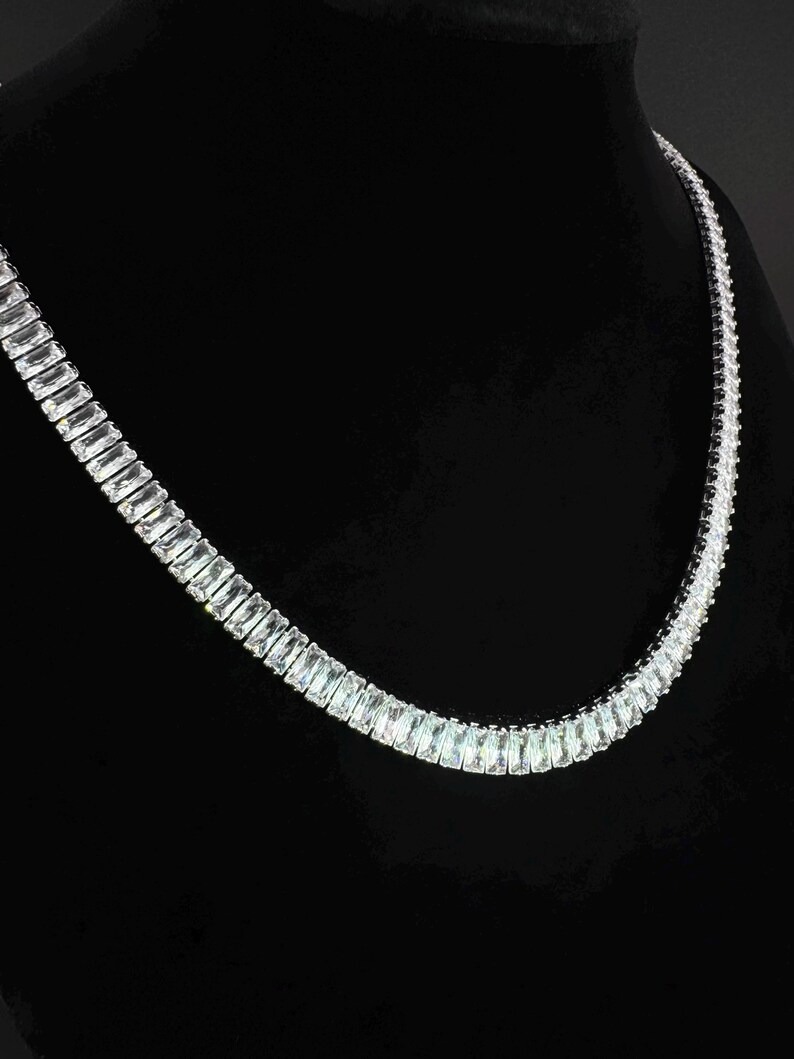
The defining feature is that every stone is set in its own small head or bezel, linked to the next. That construction is what gives the bracelet its fluid drape, and it is also where quality differences hide.
Why bracelets are 2026’s most engineered category
JCK’s coverage of the 2026 shows described bracelets as one of the most energised categories in the trade — not for their looks, but technically. The innovation is in closure engineering, stone placement, weight distribution and modularity. The Natural Diamond Council’s 2026 forecast similarly lists tennis bracelets among the strongest everyday-luxury pieces.
Translation for a buyer: in 2026 the difference between a good tennis bracelet and a poor one is mostly in the parts you cannot see.
Tennis bracelet buying guide: the six decisions that matter
1. Total carat weight
Total carat weight determines how substantial the line looks. As a rough guide, 1–2 ct reads as delicate and layers well; 3–5 ct is the classic standalone look most people picture; 7 ct and above makes a deliberate statement and needs a heavier setting to carry it. Wrist size matters too — the same 4 ct spread across a 6-inch wrist looks noticeably larger than on a 7.5-inch wrist.
2. Colour and clarity
Because the stones sit side by side, consistency matters more than any individual grade. Jewelry specialists quoted by Who What Wear generally point to the G–H colour range with SI2 or better clarity as the sweet spot for classic styles, with some designers preferring H or better colour and VS clarity for a cleaner look. The practical rule: ask whether the stones are matched for colour across the whole line, not just what grade they are.
3. Setting style
Four-prong settings show the most stone and the most sparkle. Bezel settings enclose each stone in a metal rim — less fire, but far less snagging and a smoother line. Channel settings sit the stones between two metal rails, which is the most protective and the most modern-looking. There is no best answer; there is only what suits how you live.
4. The clasp and the safety catch
This is the decision most buyers skip and most regret. Look for a box clasp with a click, plus a figure-eight safety latch or a hidden safety catch as a second point of security. A single lobster clasp on a tennis bracelet is a weak specification. Ask how the clasp is attached to the line, too — a well-made bracelet distributes stress across the end links rather than loading it onto one solder joint.
5. Metal and karat
White gold remains the traditional choice because it makes the stones look larger and brighter. Yellow gold reads warmer and more current. 14K is the practical standard: it holds fine prongs better than softer high-karat gold and costs less at a time when gold prices are historically high. 18K looks richer but is softer, so prongs need checking more often. Sterling silver is a legitimate way into the style at a much lower price, provided you accept it will need more care.
6. Lab-grown or natural
Lab-grown diamond wholesale prices have fallen roughly 96% since 2018 on Edahn Golan’s index, including declines of 14% and 13% in the first two quarters of 2026, according to JCK. That is why a carat weight that was once out of reach is now realistic. If you want a full-looking line for a set budget, lab-grown diamond jewelry gets you there. If moissanite is also on your list, our lab-grown diamond vs moissanite guide compares them properly.
One correction to something you will read elsewhere: tennis bracelets are frequently described as investment pieces whose diamonds appreciate. That is not a safe assumption, and for lab-grown it is simply wrong — wholesale prices have been falling for years and there is no reliable resale market at retail prices. Buy it to wear.
What a tennis bracelet should cost
Prices vary enormously with stone type and carat weight. Consumer coverage of the category in 2026 puts most quality pieces in a broad $1,500–$5,000 band, with entry-level natural-diamond bracelets starting around $1,600 and diamond-alternative versions available for a few hundred dollars. Lab-grown sits well below natural for the same spread and look.
What should worry you is not a low price but an unexplained one. Ask what the stones are, the total carat weight, the metal karat, and the piece weight in grams. If a seller cannot answer all four, the price tells you nothing.
Getting the fit right
A tennis bracelet should move about a centimetre in either direction on the wrist — loose enough to sit naturally, tight enough that it cannot slide over the hand. Measure your wrist snugly with a tape and add roughly half an inch. Too loose is the more common mistake, and it puts constant strain on the clasp. Once you have it, our jewelry care guide covers cleaning and how often to have the settings checked.
Frequently asked questions
How many carats should a tennis bracelet be?
For most people, 3–5 ct total gives the classic look without being heavy. Go lighter if you want something to layer with a watch, heavier if it is meant to be the only piece on that wrist.
Can a tennis bracelet be resized?
Yes, but only in whole links, since every link holds a stone. That means adjustments come in fixed increments, and shortening a bracelet leaves you with spare links. Get the length right at the point of order rather than planning to alter it.
Is a lab-grown tennis bracelet worth it?
If your goal is how it looks on your wrist, yes — you get considerably more carat weight for the same money, and lab-grown diamonds are chemically and optically the same material as mined ones. If your goal is resale value, no.
How often should the settings be checked?
Once a year for a piece worn daily, and immediately after any knock. Prongs wear down gradually and a stone is usually lost long before anyone notices the prong was thin.
The takeaway
Most tennis bracelet disappointment comes from two places: a clasp that was never specified properly, and stones graded well individually but not matched as a line. Get those right, decide whether you are buying sparkle or durability, and the rest is a budget decision rather than a quality one. Browse our bracelet collection or tennis chains if you want to see the construction up close.