

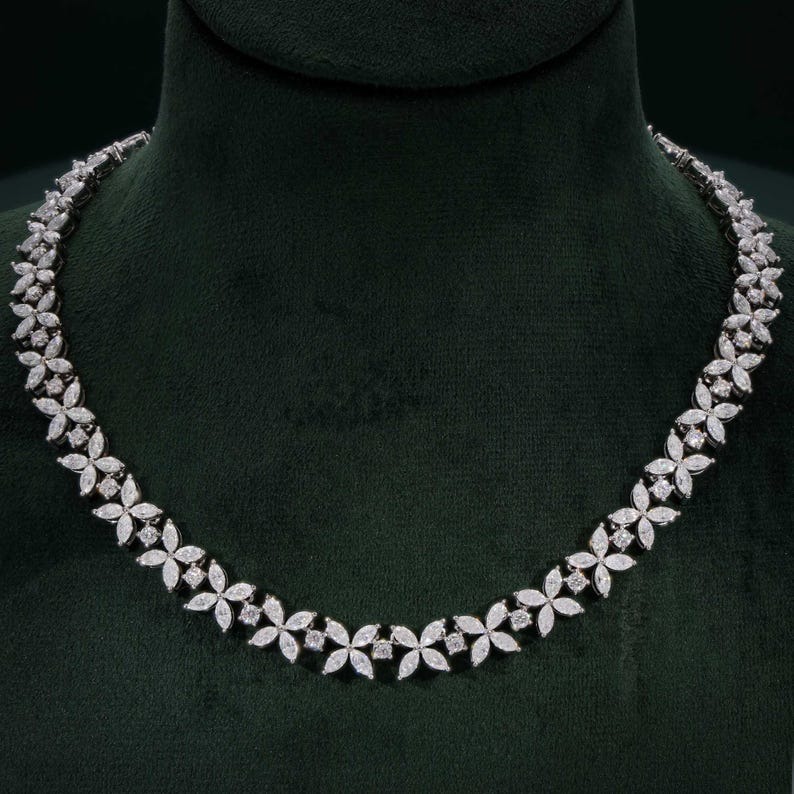
Two things happened to the jewelry business in 2026, and they moved in opposite directions. The metal you build jewelry out of became dramatically more expensive. The stones you set into it became dramatically cheaper. Most retail buying plans were written for a world where those two costs moved roughly together — and that world is gone.
If your average ticket is up but your unit count is down, you are not imagining it. That gap is the commercial story of the year, and it changes what you stock, how you price it, and what you ask of the people who manufacture for you.
What actually happened to metal prices in 2026
Gold spent 2025 breaking records — 53 all-time highs, and an annual average of $3,431 an ounce, up 44% on the year, according to National Jeweler’s April 2026 analysis. Then 2026 opened hotter still. Gold pushed past $5,100 an ounce in January before easing back to roughly $4,600 by late March. Across the second quarter the LBMA PM price averaged $4,506.29 an ounce — 37% above the same quarter a year earlier, and only about 8% below the record set in Q1, per the World Gold Council.
Silver, the traditional escape hatch when gold gets expensive, did not stay cheap either. The Silver Institute reports the annual average silver price rose 42% in 2025, and silver hit an all-time peak above $121 an ounce on 29 January 2026 before retreating to the mid-$70s by early April. Silver jewellery fabrication fell 8% globally in 2025, and the Institute forecasts double-digit declines in jewellery and silverware demand across 2026.
Both of the metals that carry most of a typical inventory repriced upward inside about twelve months. That is a different problem from a fashion swing: you can merchandise around a style that stops selling, but not around the cost of a gram.
A third line matters if you import. National Jeweler reported US tariffs at 10% across the board as of April 2026, after goods of Indian origin had earlier faced rates as high as 50%. Rates move, so confirm the current one for your product classification before costing a program — and treat duty as a live component of landed cost, not a spreadsheet afterthought.
Demand did not collapse — weight did
This is the number most retailers read the wrong way round.
Global gold jewellery demand in the first quarter of 2026 came in at 300 tonnes, down 23% year on year and the weakest quarter since Q2 2020 — yet the value of that demand rose 31% to $47 billion, a record first quarter. The second quarter repeated the pattern: 278.2 tonnes, down 17% from 335.3 tonnes a year earlier, the lowest quarterly volume since the pandemic, while spending rose 14% to $40 billion.
The United States shows it even more sharply. US gold jewellery demand was 22.2 tonnes in Q2 2026, down 25% from 29.7 tonnes in the same quarter of 2025. The World Gold Council’s US market report notes buyers are favouring “lighter-weight and lower-carat products,” and that the weakness has been most pronounced in the mass market while higher-end jewellery held up better.
Put plainly: fewer grams are leaving stores, but each transaction costs more. National Jeweler’s reporting makes the same point from the retail side — higher average retail prices in 2026 mostly reflect higher input costs, not a customer who has decided to spend more. The Plumb Club notes jewelry store sales still outpaced many other discretionary categories in the first half of 2026.
So a rising average ticket is not evidence of a healthy business. Track units and grams alongside dollars — that is where the erosion is.
The other half of the story: stones got cheap
While metal was climbing, the stones went the other way. JCK, reporting on Edahn Golan’s wholesale index, recorded lab-grown diamond wholesale prices down 14% year on year in Q1 2026 and 13% in Q2, following a 26% fall across 2025. On that index, wholesale lab-grown prices have dropped roughly 96% since 2018. A 3-carat VVS D round was quoted at about $126 per carat.
Two consequences matter for buyers. First, retail margins on lab-grown have held. Analyst Paul Zimnisky observes that retailer markups stayed above 80% through 2026, meaning the compression has been absorbed by growers, manufacturers and wholesalers rather than the shop floor. For a retailer, that is a genuinely favourable position — but only if you buy correctly.
Second, less comfortably, deep lab-grown inventory is a depreciating asset in a falling market. JCK’s reporting notes US retailer lab-grown inventory has risen from single digits as a share of sales in 2020 to roughly half. If wholesale keeps sliding, stock bought a year ago is priced against goods that cost meaningfully less today. Buy shallower, replenish more often, and push more of the range to made-to-order.
The deeper structural point is the inversion. In a stone-set gold piece, the stone used to be the expensive part. In 2026 that is frequently no longer true — metal and labour now dominate the cost sheet on a great many designs. If your assortment was built around the old ratio, it is now mispriced against what customers can actually see.
Five shifts worth making in your 2027 assortment
1. Lighter gauge, smarter construction
The cheapest way to hold a price point is to use less metal without the piece looking or feeling cheap. That means hollow and semi-hollow chain, tube and channel settings that carry stones on less metal, engineered link profiles, and considered weight distribution. This is an engineering problem, not a discount. JCK’s 2026 show coverage singled out bracelets as one of the most technically energised categories precisely for this reason — closure design, stone placement, weight distribution and modularity are where the innovation is happening.
2. Let the stone do the visual work
Since stone cost fell and metal cost rose, designs that deliver maximum visual impact per gram of metal now offer the best perceived value per dollar. Tennis lines, bezel-set everyday pieces, halo and cluster settings, and pavé-forward silhouettes all read as substantial while keeping metal weight controlled. Lab-grown diamond jewelry and moissanite both suit this approach well, because the stone budget stretches far enough to fill a design properly.
3. Build a real silver-plus-stone entry tier
Silver is up, but it remains a small fraction of gold’s cost per gram. A 925 sterling silver piece set with lab-grown diamonds or moissanite reaches gift and self-purchase price points that gold simply cannot touch in 2026. This is not a downgrade tier — it is the tier that keeps footfall converting while your gold cases serve a narrower, higher-spending customer.
4. Convertible and multi-wear pieces
JCK’s 2026 coverage highlighted transformable jewelry — a pendant that detaches, a bracelet that becomes a choker, earrings with removable drops — as a way to justify a higher ticket honestly. The customer is buying two or three looks, not one. In a year when every price point needs defending, that argument does real work.
5. Merchandise for non-bridal occasions
De Beers’ 2026 US Diamond Acquisition Study, which surveyed 18,500 women aged 18 to 74, found that non-bridal occasions now account for around three-quarters of overall US diamond demand — birthdays, promotions, personal milestones and self-purchase. The same De Beers research found Gen Z accounts for about 23% of natural diamond demand value while making up 18% of the population, spending roughly $4,080 per piece against $2,250 for baby boomers. If your case layout and your calendar are still organised primarily around engagement season, you are merchandising for a quarter of the market.
10K, 14K or 18K: a practical costing view
Karat choice is now one of the biggest levers on landed cost. The fine gold content is what you are paying for: 10K is 41.7% pure gold, 14K is 58.3%, and 18K is 75%. On an identical design, moving from 14K to 10K removes roughly 28% of the fine gold; moving from 14K to 18K adds roughly 29%.
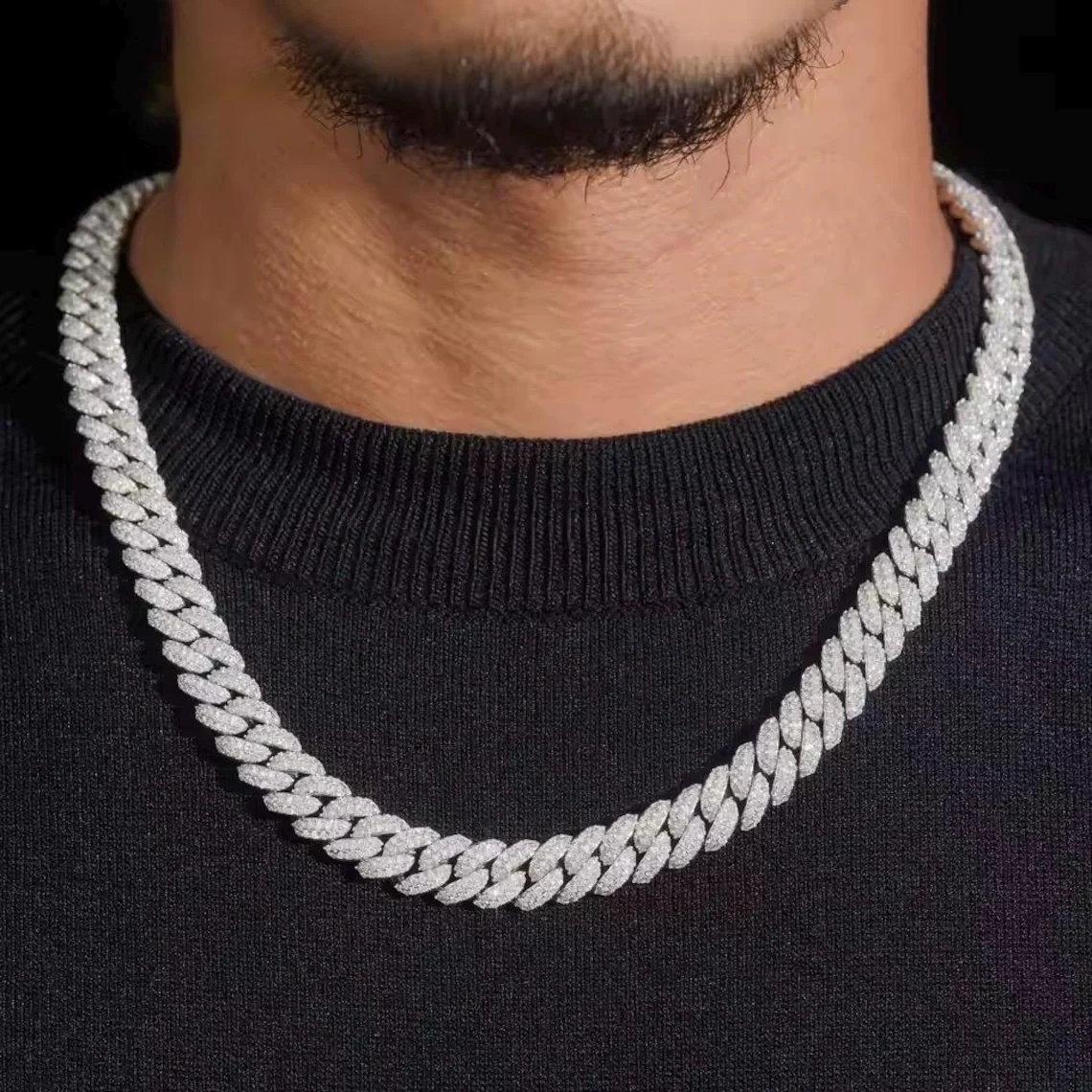
In practice: 10K earns its place in men’s chains, Cuban links, hip-hop styles and high-turn daily-wear pieces where durability and price point matter more than metal purity. 14K remains the American default for bridal and core fine jewelry, and is what most US customers expect without needing an explanation. 18K belongs in statement and premium pieces where the richer colour and the story justify the cost. Whichever you use, the karat stamp must be accurate — US labelling rules on quality marks are not a place to improvise, and a reputable manufacturer will confirm karat and metal weight in writing.
How to hold margin without discounting
Discounting into a cost increase funds your suppliers’ price rises out of your own gross margin. Better levers:
- Build a deliberate price ladder. Three defined tiers in every core category — silver-plus-stone entry, 10K/14K core, 18K or heavier statement — so a customer trades down within your assortment instead of walking out.
- Lead with design and story, not carat weight. When metal is expensive, the argument for a piece has to be what it looks like and what it means, not how many grams it contains.
- Sell customization properly. The Plumb Club identifies customization and remount services as a genuine growth driver in 2026, alongside a broader consumer shift toward fewer, better purchases. Custom work carries margin that stock does not, and it converts an inventory problem into a service.
- Specify openly. Metal, karat, stone type and grading, closure construction, total weight. In a price-sensitive year, transparency is a competitive advantage — vague listings read as evasive.
- Turn stock, do not stockpile it. This applies with particular force to lab-grown, where wholesale is still falling.
What to ask a jewelry manufacturer in 2026
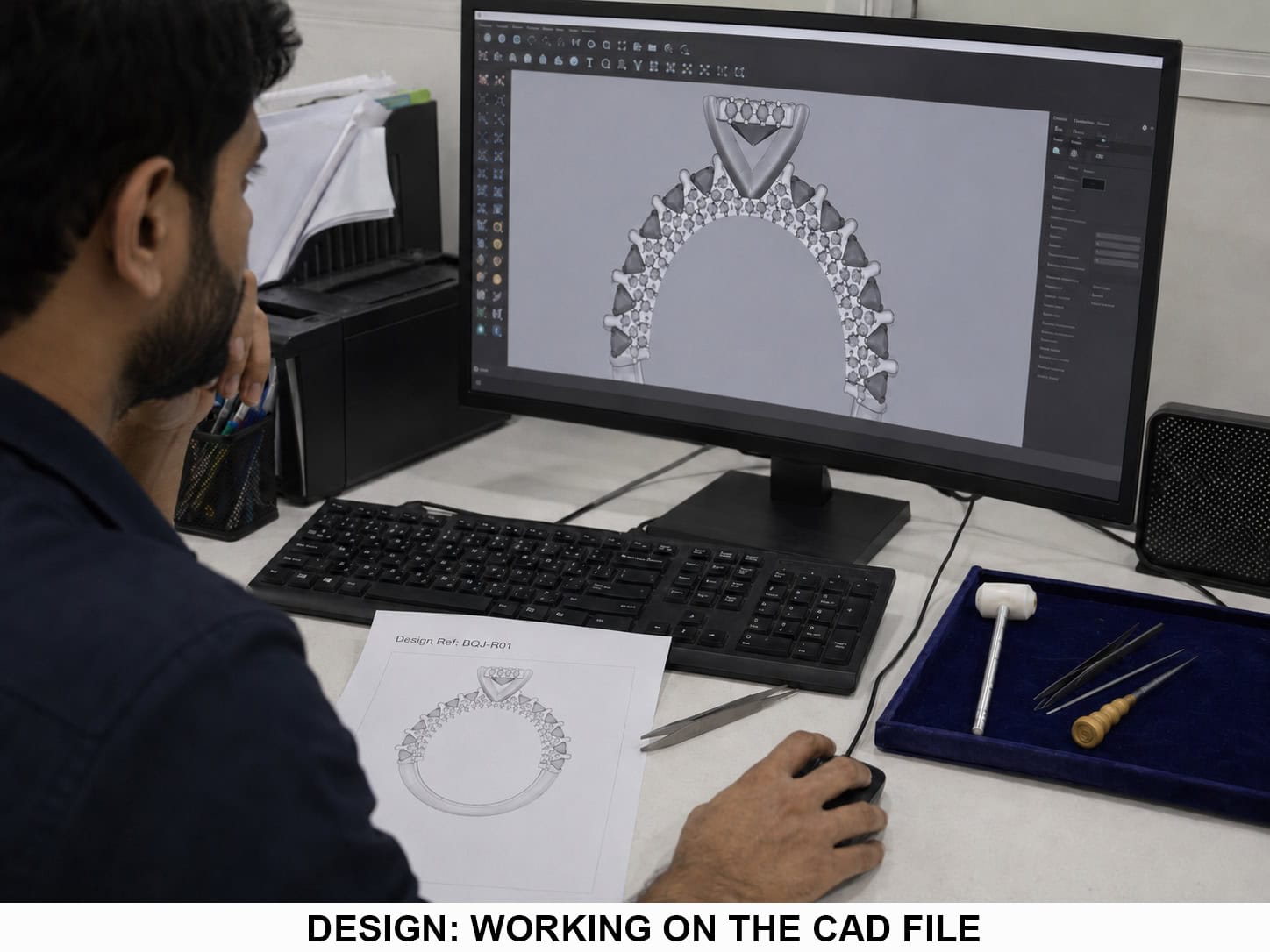
These conditions shift real work upstream. A manufacturer who can re-engineer a design to hit a target price is worth far more this year than one who sends a catalogue. Before committing to a program, get answers in writing on:
- Metal weight and tolerance per piece, in grams — and what happens if a delivered batch runs heavy.
- Whether a design can be re-engineered to a target weight or price without losing its look.
- Karat options across 10K, 14K and 18K from the same CAD file, so one design can serve several price tiers.
- Stone disclosure and documentation — how lab-grown and moissanite are described, marked and evidenced.
- How metal price movement is handled between quote and delivery, and how long a quote is valid.
- Minimum order quantity per design versus per order, which are very different things for a small retailer testing a range.
- CAD development lead time and sampling cost for a new design.
- Private-label capability — stamping, packaging, labelling and whether the manufacturer’s identity appears anywhere on the goods.
- Repeat-order consistency, so a reorder six months later matches the first run.
- Duty classification and Incoterms, so landed cost is agreed before goods ship rather than discovered at customs.
Where a manufacturing partner fits
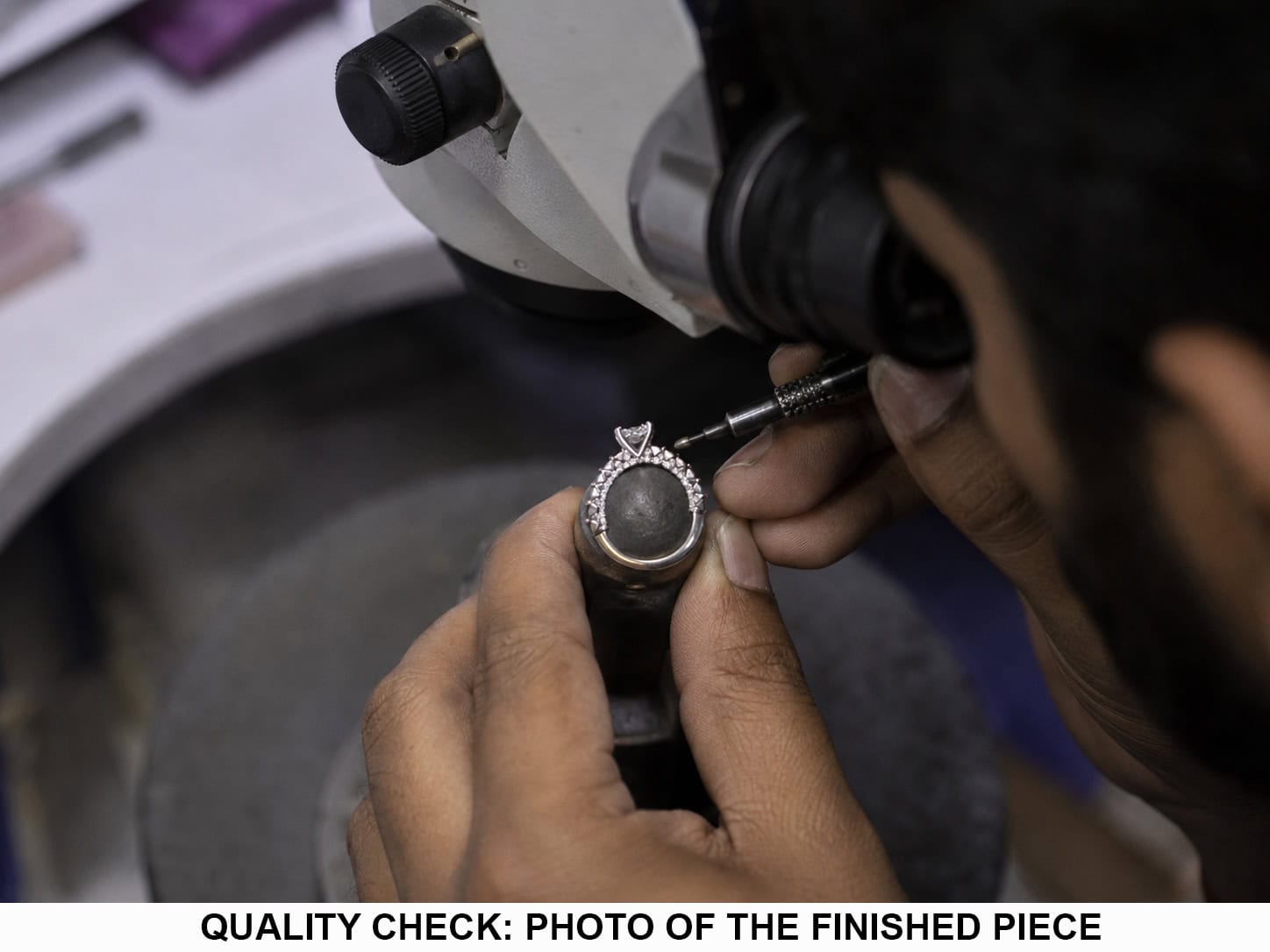
Most of the moves above — lighter construction, several karat options from one design, a silver entry tier, made-to-order rather than deep stock — are easier with a manufacturer than a stock wholesaler, because they involve changing the product rather than picking from what already exists.
Bluequeen Jewels manufactures from Surat, India, working in lab-grown and natural diamond, moissanite, 925 sterling silver, and 10K, 14K and 18K gold across rings, chains, bracelets, pendants, earrings and watches, including Cuban, tennis and hip-hop styles. Work is CAD-based, which is what makes weight adjustment and multi-karat versions of a single design practical, and the same setup supports custom development and private-label and wholesale production for retailers and brands in the USA and internationally. If you want to see how goods are actually made before committing, the factory page covers the production side.
Retailers, resellers and private-label brands rebuilding an assortment for these conditions can work with a manufacturer directly on weight, specification and price point rather than buying whatever the market happens to be holding. Get in touch to discuss samples, a custom development run, or wholesale options.
Frequently asked questions
Why did gold jewelry sales fall in 2026 if jewelry spending went up?
Because price and volume moved in opposite directions. World Gold Council data shows global gold jewellery demand fell 17% by weight in Q2 2026 while the value of that demand rose 14%, because gold averaged roughly 37% more per ounce than a year earlier. Customers bought less gold and paid more for it. For retailers, this means revenue can look stable while unit sales quietly decline.
Is 10K gold a sensible option for US retail in 2026?
For the right categories, yes. 10K contains 41.7% fine gold against 14K’s 58.3%, so it removes a substantial share of the metal cost from a design. It suits men’s chains, Cuban links, hip-hop pieces and everyday high-turn jewelry, and it is harder than higher karats. 14K remains the expected standard for US bridal and core fine jewelry, so 10K is best used to widen a range rather than to replace it.
Should retailers still stock lab-grown diamond jewelry while wholesale prices keep falling?
Stocking it is not the issue — the depth of the buy is. Retail markups on lab-grown have held above 80% through 2026 even as wholesale fell, so the category still carries margin. The risk is holding a large inventory that is being repriced downward beneath you. Buying shallower, replenishing more frequently, and offering more designs made-to-order manages that exposure while keeping the range in front of customers.
Is sterling silver still a cheap alternative to gold?
Cheaper, yes; cheap, no longer. The Silver Institute reports the annual average silver price rose 42% in 2025, with a January 2026 peak above $121 an ounce. Silver remains a fraction of gold’s cost per gram and is still the most practical route to accessible price points — but it should be costed properly and repriced as the market moves, not treated as a fixed-cost filler category.
What is a realistic minimum order for custom or private-label jewelry?
It varies widely by manufacturer and by whether you are ordering an existing design or commissioning new CAD work. The important distinction to clarify is minimum per design versus minimum per order, since a small retailer testing several styles is affected very differently by each. Ask for both figures, plus sampling cost and development lead time, before you plan the program.
The short version
In 2026 the cost of jewelry moved into the metal and out of the stones. Retailers who keep buying to a pre-2025 ratio will find themselves either overpaying for weight their customer cannot see or discounting to move it. The retailers who do well from here will buy lighter and smarter, build a proper entry tier, keep lab-grown stock shallow and moving, merchandise for the three-quarters of demand that has nothing to do with a wedding, and treat their manufacturer as a design and costing partner rather than a catalogue.
None of that requires predicting where gold goes next — only building an assortment that does not depend on gold going back down.
