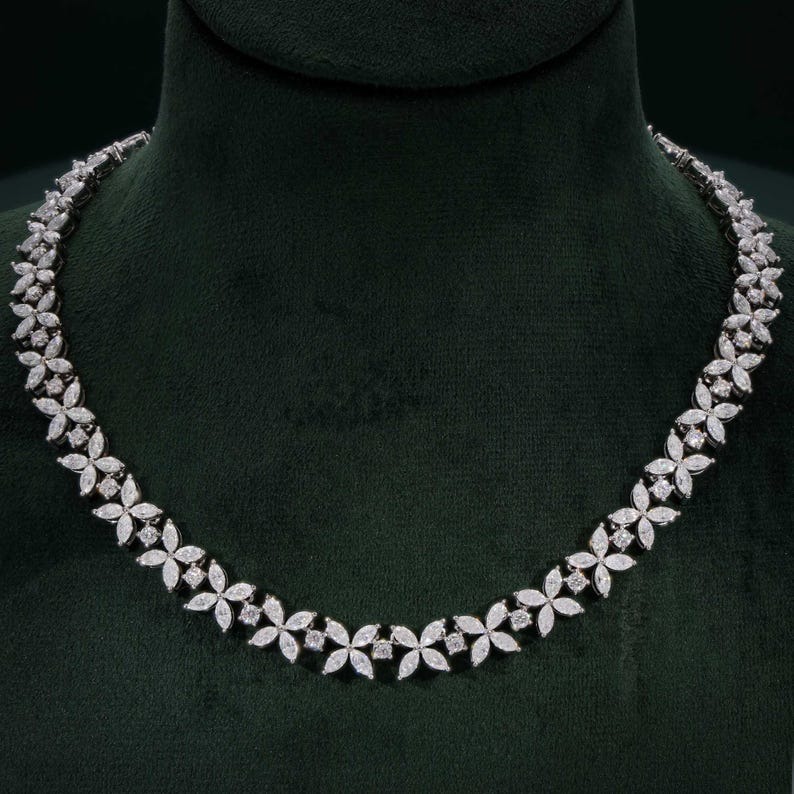

You search for a 1-carat lab grown diamond. The results come back and the prices are all over the place. Some are a few hundred dollars. Some are several thousand. Same carat weight, wildly different numbers.
Nobody explains why. So buyers assume either the cheap ones are fake or the expensive ones are a rip-off. Usually neither is true.
We buy loose lab grown stones every week to set into the pieces we manufacture in Surat. Here is exactly what moves the price, in the order that it matters.
First: Why Lab Grown Diamonds Cost Less Than Mined At All
A lab grown diamond is chemically and physically the same material as a mined diamond. So why is it dramatically cheaper?
Supply. Mining is slow, capital-intensive, geographically limited, and produces uncertain yields. Growing is a manufacturing process — you can build another reactor. When supply can expand in response to demand, prices behave like manufactured goods rather than scarce commodities.
No scarcity structure. The mined diamond market has historically been managed to control the flow of stones to market. Lab grown has no equivalent structure and never has.
Falling production costs. Reactor technology has improved fast. Yields per run are higher, cycles are shorter, and there are far more producers than there were five years ago.
The result is that lab grown diamond prices have fallen substantially over recent years, and the gap against mined stones has widened. This is excellent news if you are buying jewelry. It is bad news if you were hoping to resell — see the resale section below.
The Five Things That Set the Price
1. Cut Quality — The Biggest Factor, and the Most Ignored
If you take one thing from this article, take this: cut quality affects both price and beauty more than anything else, and it is the specification buyers skip most often.
Cut is not the shape. Cut is how precisely the facets are angled and proportioned so that light entering the stone bounces back to your eye instead of leaking out of the bottom.
- An Excellent cut stone comes alive. Light returns hard.
- A Poor cut stone looks flat and glassy no matter how good its colour and clarity are.
Cutting to Excellent takes more time, more skill, and — critically — sacrifices more of the rough stone. A cutter can produce a heavier stone by cutting it deeper and worse. That heavier stone weighs more on paper and sells for a higher headline number while looking distinctly worse.
This is the single most common way a “cheap 1 carat” is cheap. It is a genuine 1 carat. It is just cut badly.
Our advice: never buy below Very Good. Buy Excellent whenever the budget allows. You will get more visible beauty per dollar from cut than from any other upgrade.
2. Colour — D Through Z
Colour grades run D (completely colourless) down through Z (noticeably tinted yellow or brown).
- D, E, F — Colourless. Premium pricing.
- G, H, I, J — Near colourless. Slight warmth that is very difficult to detect once set, especially in yellow gold.
- K and below — Visible warmth.
Where the value is: G and H. In a mounted ring, under normal lighting, most people cannot distinguish a G from a D. But there is a real price step between them.
Two things that change this advice:
- Metal matters. Yellow and rose gold settings reflect warm tone into the stone anyway, so a G or H looks perfect and you save meaningfully. In white gold or platinum, the contrast is more visible, so consider F or better.
- Shape matters. In emerald cut, colour shows more because of the open step facets. Go one to two grades higher than you would for a round.
3. Clarity — FL Through I3
Clarity describes internal inclusions and surface blemishes.
FL (flawless) → IF → VVS1, VVS2 → VS1, VS2 → SI1, SI2 → I1, I2, I3
Where the value is: VS1 and VS2. These are eye-clean — you will not see an inclusion without magnification — and they cost significantly less than VVS or flawless.
Paying for VVS or FL means paying for something only a loupe can see. That is a legitimate choice if the certificate itself matters to you. It is not a visual upgrade.
Where to be careful: SI1 and SI2 are a gamble. Some are eye-clean and represent excellent value. Some have a visible inclusion in a bad position. Never buy SI without seeing high-resolution video of the actual stone.
And again, shape changes this. Emerald cut needs VS1 minimum. Brilliant cuts hide inclusions far more effectively.
4. Carat Weight — and the “Magic Sizes” Trap
Price does not rise smoothly with weight. It jumps at round numbers.
There is a price step at 0.50 ct, another at 0.90, a big one at 1.00, and further steps at 1.50 and 2.00. These are magic sizes — points where demand clusters because buyers search for round numbers.
The exploit: buy just below a magic size.
A 0.90 ct stone can be noticeably cheaper than a 1.00 ct stone of identical quality. The visible diameter difference between them is a fraction of a millimetre — genuinely imperceptible on a hand.
Same trick at 1.40 vs 1.50, and 1.90 vs 2.00.
Also: check the measurements, not just the weight. A well-cut stone spreads its weight across the top. A deeply cut stone hides weight underneath where nobody sees it. Two 1.00 ct rounds can differ meaningfully in face-up diameter. The millimetre measurements on the certificate tell you which is which.
5. Growth Method and Treatment
CVD and HPHT are the two ways lab diamonds are grown. Neither is better in the finished stone, and both are real diamonds.
What does affect price:
- Some CVD stones are treated after growth — typically with an HPHT process — to improve their colour. This is standard, legitimate industry practice and must be disclosed on the certificate. Treated stones sometimes price slightly differently from untreated ones.
- Fluorescence — whether the stone glows under UV. None to Faint is the neutral default. Strong fluorescence occasionally causes a slight hazy look in direct sunlight and usually carries a small discount.
Check the “post-growth treatment” line on the certificate. If it is blank or missing on a stone being sold as untreated, ask.
Then There Is Everything Around the Stone
The diamond is only part of what you pay for.
Metal weight. A solid 14K gold ring might weigh 3 grams; a heavy signet or wide band might weigh 12. Gold is priced per gram at global market rates, so metal weight is a real, calculable part of your cost. Ask for it in grams.
Karat. 18K contains more gold than 14K and costs more per gram accordingly.
Setting complexity. A plain four-prong solitaire takes a fraction of the bench time of a halo with 40 pavé stones, or a three-stone with matched side stones. Labour is real cost.
Accent stones. A halo or pavé band adds dozens of small stones, each needing individual setting.
Certification. Grading has a fee. On a large centre stone it is negligible as a percentage. On small stones it is disproportionate, which is why melee is not individually certified.
Who you are buying from. A stone that travels producer → wholesaler → distributor → retailer → you collects a markup at every stop. Buying from the manufacturer removes several of those layers. This is the single largest variable that has nothing to do with the stone itself.
The Best-Value Specification
If you want the most beautiful stone per dollar and you are not chasing certificate bragging rights, here is what we would buy for ourselves:
| Specification | Target | Why |
|---|---|---|
| Cut | Excellent | Non-negotiable. The biggest visible upgrade available. |
| Colour | G or H | Indistinguishable from D once set, meaningfully cheaper. |
| Clarity | VS1 or VS2 | Eye-clean without paying for invisible perfection. |
| Carat | Just below a magic size — 0.90, 1.40, 1.90 | Same visual size, real saving. |
| Fluorescence | None or Faint | Avoids any risk of haze. |
| Certificate | IGI, verified online | Independent confirmation without a GIA premium. |
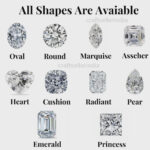
| Shape | Anything but round | Fancy shapes cost less per carat and look larger. |
Adjustments: for an emerald cut, raise colour to F and clarity to VS1. For a white gold or platinum setting, consider F colour.
An Honest Word About Resale
Lab grown diamonds are not an investment, and anyone telling you otherwise is selling something.
Because production capacity keeps expanding and prices keep falling, the stone you buy today will likely cost less to buy new in a few years. Resale values reflect that.
To be fair, this is not unique to lab grown. Mined diamonds also resell for a fraction of retail, because you paid retail and the next buyer will only pay wholesale.
What actually holds value in your piece is the gold. Solid 14K or 18K has a real, quotable scrap value that tracks the global gold price. This is one of several reasons we build in solid gold rather than plated metal.
Buy jewelry because you want to wear it. If you want an investment, buy bullion.
Six Ways Sellers Make Prices Look Better Than They Are
- “Total carat weight.” A listing advertising “2 CT” might mean one 2-carat stone, or a 0.50 centre with 1.50 carats of tiny accent stones. Those are completely different products at completely different prices. Look for “centre stone weight.”
- No cut grade listed. Colour and clarity are quoted proudly; cut is missing. That is deliberate. Missing cut grade usually means it is not Excellent.
- Uncertified stones above 0.50 ct. At that size a certificate is economically sensible and standard. Its absence means the seller’s claimed grades are their own opinion.
- Deep discounts off an invented “original price.” A 70% discount off a number nobody ever paid is not a discount. Compare against other sellers, not against the crossed-out number.
- Grades quoted as a range. “F–G colour, VS clarity” means you will receive the bottom of every range. Fine on small accent stones; unacceptable on a centre stone.
- Metal described without a karat stamp or gram weight. If the listing will not tell you the karat and the weight, the answer is usually plated.
What We Do Differently
We are the workshop, not a reseller. That means:
- We tell you the centre stone’s full specification — carat, colour, clarity, cut, certificate number — separately from any accent stones.
- We tell you the gram weight and karat of the metal.
- We send video of your actual stone before setting, not a stock image of a different one.
- You can verify the IGI report number on IGI’s own website before you pay us anything.
- There are no middlemen between the bench and your hand.
If you tell us your budget, we will tell you honestly what specification gets you the best-looking stone within it — including telling you when spending less would get you the same result.
Send us your budget and shape preference, and we will come back with real options and real numbers.
Frequently Asked Questions
Why are lab grown diamonds so much cheaper than mined?
Because supply can expand. Growing diamonds is a manufacturing process with improving technology and many producers, so prices behave like manufactured goods rather than a controlled scarce commodity.
Are lab grown diamond prices still falling?
Prices have fallen substantially in recent years as production capacity grew. Check current market pricing before you buy, since this moves faster than most jewelry categories.
What is the best value lab grown diamond specification?
Excellent cut, G or H colour, VS1 or VS2 clarity, and a carat weight just below a magic size such as 0.90 or 1.90. That combination looks essentially identical to far more expensive stones once set.
Is CVD or HPHT better?
Neither. Both produce real diamonds and both can produce excellent or poor stones. What matters is the finished stone’s cut, colour and clarity, plus whether any post-growth treatment is disclosed.
Why do two 1 carat diamonds look different sizes?
Carat is weight, not size. A deeply cut stone hides weight below the surface where it is invisible. Compare the millimetre measurements on the certificate, not just the carat number.
Are lab grown diamonds a good investment?
No. Neither are mined diamonds, realistically. The gold in your piece holds value; the stone should be bought to be worn and enjoyed.
What does “total carat weight” mean?
The combined weight of every stone in the piece, including tiny accents. It is not the size of the centre stone. Always ask for the centre stone weight separately.